
How to Keep an Above Ground Pool Warm Without a Heater
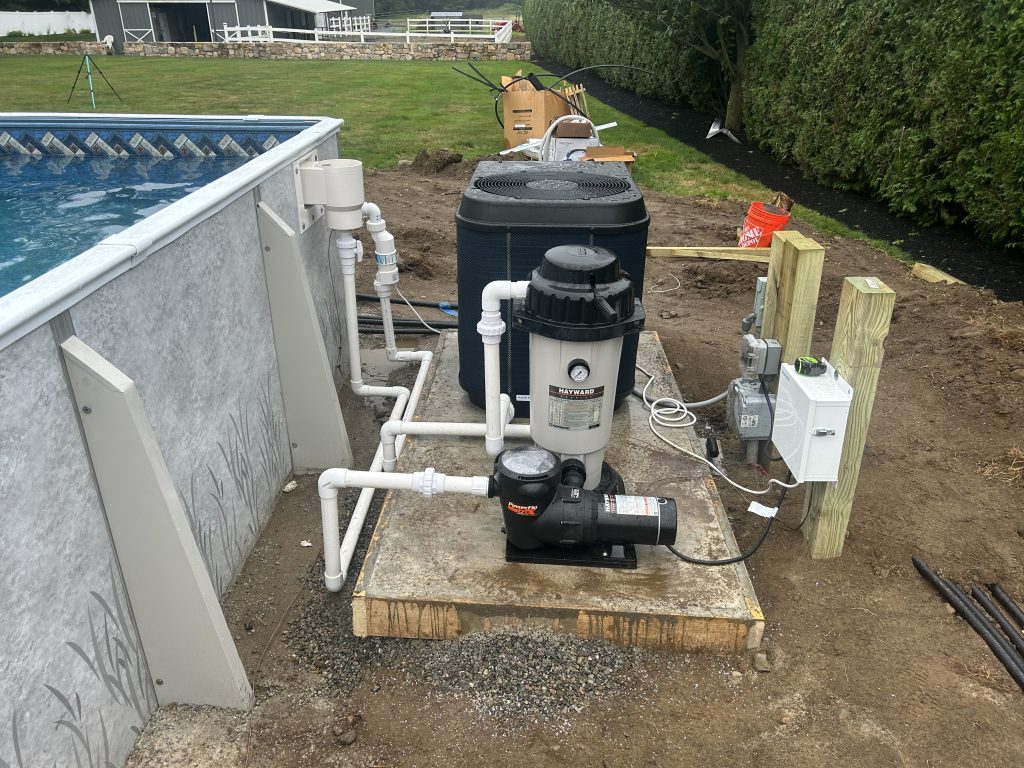
New England pool water can be chilly well into June, and a gas heater or heat pump isn’t in every budget. The good news: most of the heat your pool loses goes out through the surface, so a few simple steps can keep the water noticeably warmer without any heater at all.
Step 1
Where your pool loses heat
According to the U.S. Department of Energy, evaporation is by far the biggest source of heat loss in a swimming pool. Every bit of water that evaporates off the surface takes heat with it, and wind and cool nights make it worse. That’s why almost everything below works by covering or shielding the surface.
Step 2
Use a solar cover
A solar cover is the single most effective thing you can do. It floats on the water, lets sunlight warm the pool during the day, and traps that heat at night by stopping evaporation. It also cuts down on water loss, chemical use and debris.
- Get the right size. Buy one sized for your pool, like this 18′ round solar cover, and trim it so it covers the whole surface.
- Bubbles face down. The bubble side goes against the water.
- Cover it every night. The biggest heat loss happens overnight, so put it on as soon as you’re done swimming.
- Store it in the shade. When it’s off the pool, sun on a folded cover can overheat and damage it.
A solar cover is not a safety cover. Never swim under one, and always take it fully off the pool before anyone gets in.
Step 3
Make the cover easy to use
A solar cover only works if it actually goes on every night. If wrestling it on and off is a chore, a solar cover reel lets one person roll it off and on in a minute or two. Most above ground reels, like this one, need a tube kit sized to your pool’s width, sold separately, so measure across the pool before you order.
Step 4
Try solar rings or a liquid cover
If a full cover isn’t practical, these help, though not as much:
- Solar rings: floating rings that cover most of the surface and are easy for anyone to lift out.
- Liquid solar cover: a product you add to the water that forms an invisible layer on the surface to slow evaporation. It works best on calm days and needs regular doses.
Step 5
Block the wind
Wind across the water speeds up evaporation and pulls heat away. A fence, hedge or privacy screen on the windy side of the pool can make a real difference, as long as it doesn’t shade the water. Check your town’s fencing rules first. See Do You Need a Permit for an Above Ground Pool in Massachusetts?
Step 6
Give it more sun
- Trim back branches that shade the pool in the morning and afternoon.
- Keep the water clean and clear. Clear water lets sunlight reach the bottom. See our Pool Maintenance guide.
- Pick a darker liner next time you replace it. Darker patterns absorb more sunlight than light ones. Browse our Pool Liners.
- Put a new pool in full sun. If you’re replacing a pool, it’s the best chance to move it out of the shade. See Replacing an Old Above Ground Pool: Can the New One Go in the Same Spot?
Step 7
When you want more heat
If you’ve done all of the above and still want warmer water, or you want to stretch the season into the fall, look at solar heating panels or a heat pump. Solar panels use the sun with no fuel cost, while a heat pump keeps working on cloudy days and is the most economical heater for New England. Either way, keep using your solar cover: it holds in the heat you’re paying for. Read Above Ground Pool Heating in New England and How Long Does It Take for a Pool to Heat Up?, and check our electric requirements guide before adding anything that plugs in.
We install new pools in Massachusetts and replace liners and pools across Massachusetts and Rhode Island. We’ll help you pick a sunny spot and a liner that holds heat. Site visits are free.