
Pool Pump Won’t Prime? 7 Fixes
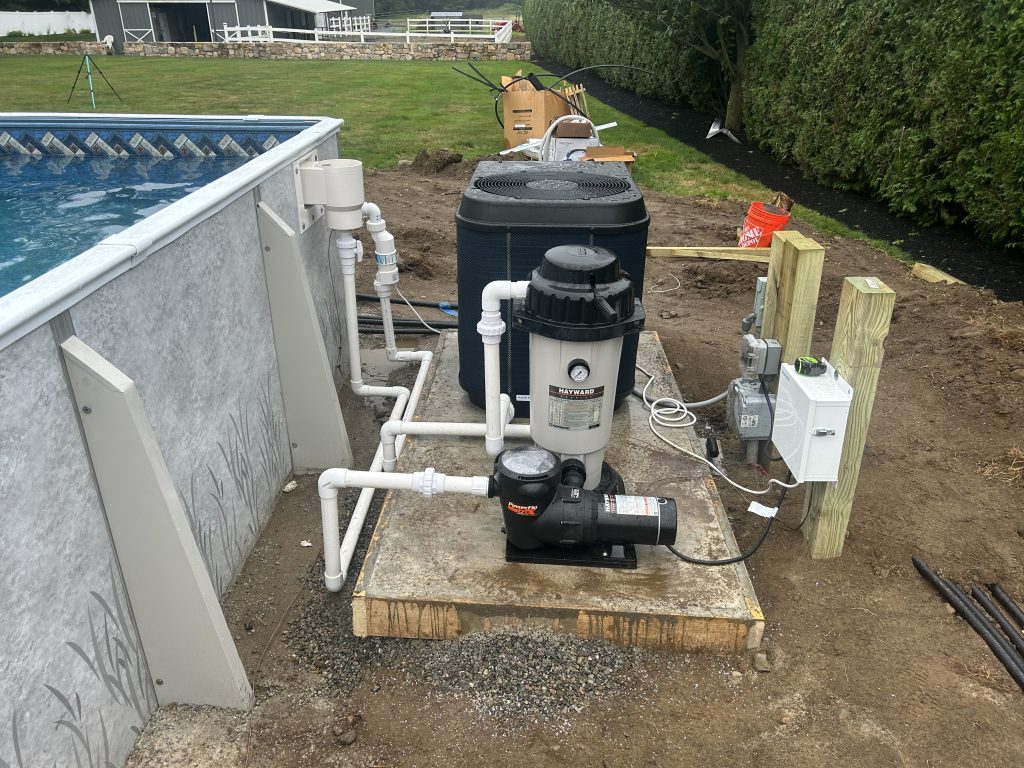
Your pump is running, but no water is moving, or the pump basket is full of air and bubbles. That’s a pump that won’t prime, and on an above ground pool it’s almost always caused by air getting into the line or not enough water reaching the pump. Work through these seven fixes in order, starting with the easiest.
Don’t let the pump run dry for more than a few minutes. Without water, the seals heat up and can be damaged. Shut the pump off, and unplug it before you open the lid or touch any fittings.
Fix 1
Check the water level
If the water is too low, the skimmer sucks air instead of water. Keep it at the middle of the skimmer opening. After a heavy swim day, a backwash or a hot week, it can drop more than you’d think. If you keep topping it off and it keeps dropping, see Reasons Why Your Pool Is Losing Water.
Fix 2
Fill the pump basket
A pump needs water in it to get started. With the pump off, remove the lid and fill the pump basket housing to the top with a garden hose or bucket. Put the lid back on tight, then turn the pump on. Most above ground pumps sit below the water line, so once water is flowing they usually stay primed.
Fix 3
Empty the baskets
A skimmer or pump basket packed with leaves can starve the pump of water. Empty both. Also check that the skimmer’s floating weir door isn’t stuck closed, and that nothing like a pool toy is blocking the opening.
Fix 4
Check the lid and O-ring
The pump lid is the most common air leak. If you see bubbles in the pump basket, start here:
- Clean the O-ring and the groove it sits in. A single leaf or a bit of sand can break the seal.
- Lubricate the O-ring with a silicone pool lubricant, sold at any pool store. Don’t use petroleum jelly. It makes rubber swell and break down.
- Replace it if it’s cracked, flat or stretched. Find the right O-ring by your pump’s brand and model number.
- Tighten the lid by hand until it’s snug, and check the lid for cracks.
Fix 5
Look for air leaks in the hoses
The hose from the skimmer to the pump is under suction, so any gap pulls in air instead of leaking water. Check it closely:
- Tighten the hose clamps at the skimmer and at the pump.
- Look for cracks, especially near the ends and where the hose bends. Old hoses get stiff and split after a few winters.
- Replace a cracked hose. A 1.5″ connecting hose is an easy swap.
- Check the pump’s front fitting. Wrap the threads with thread seal tape if it leaks.
With the pump running, slowly pour water over each connection on the skimmer-to-pump side. If the bubbles in the pump basket stop for a moment, you’ve found the leak.
Fix 6
Check valves and the filter
- Open any shut-off valves between the pool and the pump, and on the return.
- Check the filter’s valve setting. A multiport valve stuck between positions, or set to closed, blocks the flow.
- Clean the filter. A very dirty filter slows the flow. Backwash a sand filter or rinse a cartridge. See Above Ground Pool Filtration Systems.
- Remove the return plug if you’re opening for the season. A plugged return means water has nowhere to go.
Fix 7
Bleed the trapped air
Most filters have an air relief valve on top. With the pump running, open it until a steady spray of water comes out instead of air, then close it. This lets trapped air escape so water can fill the system.
Still won’t prime?
When to call for help
If none of these fixes it, the problem may be inside the pump: a clogged impeller, a worn shaft seal or a failing motor. A pump that hums but doesn’t spin, trips the breaker or runs hot needs a pro. Always plug the pump into a GFCI outlet. See Electric Requirements for Above Ground Residential Pools.
Opening the pool for the season? See the Spring Opening Checklist.
If the pool keeps losing water, the liner may be the problem. We replace liners and pools across Massachusetts and Rhode Island. Site visits are free.