
Can You Have a Salt Water Above Ground Pool?
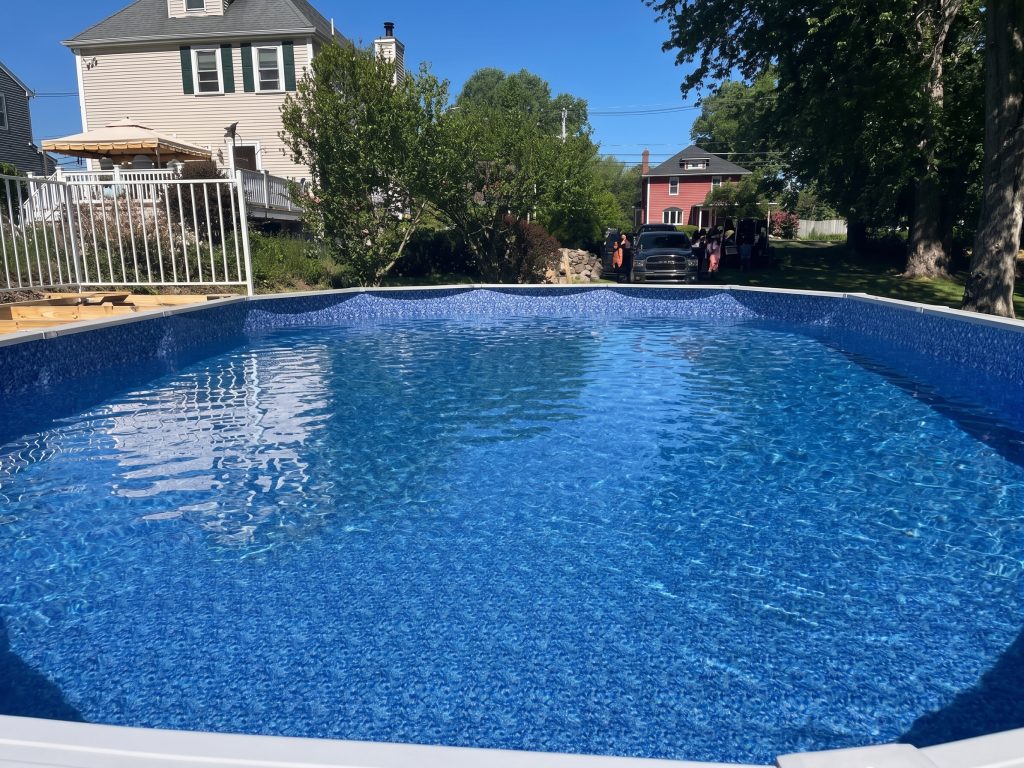
Yes, you can have a salt water above ground pool, but not every pool is built for it. Salt water is hard on steel, so the pool you choose matters as much as the salt system. Here’s how salt pools work, which pools handle salt, and what to know before you switch.
Step 1
How a salt pool works
A salt pool is still a chlorine pool. You add pool salt to the water, and a salt chlorine generator turns it into chlorine as the water flows through its cell. The water feels softer than a traditional chlorine pool, and you don’t buy, store or handle chlorine tablets.
The salt level is low, roughly a tenth as salty as the ocean, but over years even that is enough to corrode bare or scratched steel.
Step 2
Which pools can handle salt
| Pool type | Salt? |
|---|---|
| All-resin pools, like our Nakoma and Gemini | Built for salt. Resin parts don’t rust or corrode. |
| Hybrid pools (steel wall, resin parts) | Check the manufacturer’s warranty for salt before you switch. |
| Steel pools | Not recommended. Salt water speeds up rust on the wall and frame. |
Always check your pool’s warranty. Some manufacturers limit or void coverage for salt systems. Compare all our models on the Above Ground Pools page.
Step 3
What you’ll need
- A salt chlorine generator sized for your pool, like the Hayward AquaRite. It installs on the return line after the filter.
- Pool salt in 40 lb bags. Use salt made for pools, not rock salt or salt with additives.
- A way to test the salt level. Many generators show it on the control box, and test strips help with the rest of your chemistry.
- A GFCI-protected outlet for the generator. See Electric Requirements for Above Ground Residential Pools.
Step 4
Converting an existing pool
- Check your pool. If it has a steel wall, confirm the manufacturer allows salt, and look for any rust or scratches first.
- Balance the water before adding salt.
- Add salt to reach the level in your generator’s manual. Spread it around the pool with the pump running, and brush it until it dissolves.
- Install and start the generator once the salt has mixed in, usually after about a day.
- Set the output and test until chlorine holds steady at 2–4 ppm.
If your steel pool is near the end of its life, a salt-ready resin pool solves the problem for good. See Pool Replacement.
Step 5
Caring for a salt pool
- Test and balance like any pool. Keep pH, alkalinity and chlorine in range. Salt pools tend to drift toward high pH. See our Pool Chemicals guide.
- Clean the cell. Scale builds up on the generator’s cell, often needing a cleaning once a season.
- Add salt only when the level drops. Salt doesn’t evaporate. You lose it through splash-out, backwashing and rain overflow.
- Winterize the cell. Remove it or drain it before freezing weather. See Winterizing an Above Ground Pool in New England.
Step 6
Is salt right for you?
Salt is great if you want softer-feeling water and steady chlorine without handling tablets, and your pool is built for it. It costs more up front, and the cell needs care and eventual replacement. If you want less chlorine without salt, compare it with a mineral system in Pool Frog Compared to a Salt Water System.
Our all-resin Nakoma and Gemini pools are built for salt water and New England winters. We install new pools in Massachusetts and replace pools across Massachusetts and Rhode Island. Site visits are free.